


To write a useful store story, choose one customer need, describe the staff’s specific actions, and substantiate the result. Prepare documents, check the customer’s experience, and get approval to use their words and image. End the story with a clear action: check the dimensions, review what is included, confirm availability, or ask for advice.
Storytelling in retail is a coherent, factual account of a customer’s need, the store’s response, and a verified outcome. It should give readers information they can use to choose a product. Below is a practical process for preparing this kind of content for a Ukrainian store; the legal explanations refer to Ukrainian law.

Choose one value and an action that demonstrates it
Start with this question: what should a customer understand about how the store works after reading the story? For your first story, choose one value, such as care when helping a customer choose a product. Then find a specific case in which a salesperson clarified the customer’s requirements, checked the product specifications, and explained any limitations. This lets you show what the store actually does for the customer.
Write a working topic in one sentence: “How a salesperson checks a product’s dimensions before an order.” Next, list the facts the story needs: the customer’s request, the dimensions of a specific model, the options checked, and the verified outcome. If all you know is that the customer paid for the order, limit the account to that fact. Customer satisfaction after using the product needs to be established separately.
For future stories, you could choose other topics: checking what is included before handing over an item, explaining its care instructions, or confirming actual availability. Each story needs its own supporting evidence. One successful purchase lets you describe that case; claims about how the whole store operates require data for a defined period.
Gather materials and check every claim
Create a separate folder for the story and a short fact-checking table. For each planned claim, note its source, the staff member responsible, and the limits of what can be concluded. This helps the writer avoid adding details that do not appear in the documents or the customer’s responses.
| What you want to say | What to check | What limitations to state |
|---|---|---|
| The salesperson selected a product based on its dimensions | The customer’s request, measurements, specifications of the specific model, and messages about the selection | Which model and requirements were checked |
| The product was in stock | The recorded stock balance and actual availability at the relevant store location | Where and when it was checked; current stock should be confirmed before a new order |
| The customer received the order | A handover document or confirmation of receipt | Receipt does not confirm the product’s convenience or durability |
| The product met the customer’s needs | The customer’s response after using it, with the circumstances clarified | Whose experience it was, and how long and in what circumstances the person used the product |
Ask the customer what they were looking for, what requirements they had, what the salesperson checked, and what they found out after the purchase. Avoid questions that already suggest the desired evaluation. “Is the product convenient to use, and what, if anything, needs clarification?” gives the person room to describe mixed impressions.
Keep the original response and get approval for the final excerpt if you shorten or edit the customer’s words. Do not attribute opinions to them that they did not express. If the person has not used the product yet, you can describe the consultation, selection, and handover, while clearly limiting the story to those events.
Check photos separately. An original product photo can show a specific detail or what is included; use a neutral caption for a decorative image and do not present it as evidence of an outcome. Before publication, check for other people’s contact details, labels with order information, or customer documents in the frame.
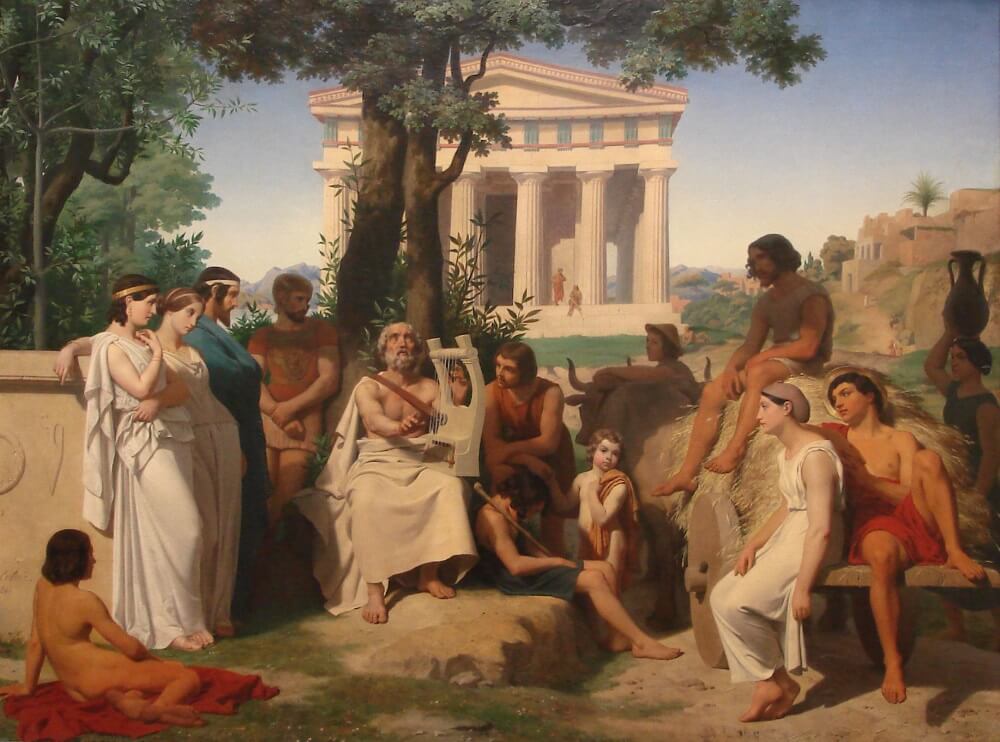
Artistic illustration of a story being told to listeners.
Write the story using a seven-part template
Fill in the points below with short sentences. Then combine them into a few paragraphs, keeping the events in order and making the connection between the need, the checks, and the decision clear.
- Audience and problem. Say who the story will help and what practical task they were solving: choosing a shelf for a narrow hallway, finding the right clothing size, or checking whether an accessory is compatible.
- Context. Mention the circumstances that affected the choice: available space, care requirements, purchase budget, or delivery deadline. Include personal details only if they are needed to understand the situation and the customer has approved them.
- Selection. Explain which options were considered and what criteria the customer used to decide whether they were suitable.
- What the store did. Describe the salesperson’s actions: measuring the product, checking the item code, checking what was included, or confirming information with the supplier.
- Evidence and outcome. State what has been verified: the measurements were recorded, the requested model was handed over, or the customer reported that it met a specific need.
- Limitations. Clarify which model, configuration, or conditions of use the conclusion applies to, and what the customer needs to check for themselves.
- Next step. Suggest one action related to the story: send the dimensions of the space, open the specifications table, or confirm availability of the required item code.
Check cause-and-effect claims when editing. If the salesperson measured a shelf, you can explain that the customer received measurements to compare with their own space. To claim that the shelf fit after installation, you need confirmation of that. Mark missing information as unknown or remove the sentence.

Example of fictional storytelling in film. A store’s story requires verified facts about its operations.
Three hypothetical examples for a retail store
All examples in this section are fictional and for training purposes. They demonstrate how to structure a story and do not describe actual purchases, reviews, or outcomes at any specific store. To publish your own story, use verified facts and keep the supporting evidence.

Example of presenting the story of the Etnodim brand in text.
Home goods store: checking dimensions
Hypothetical example. A customer needs a shelf for a niche that is 60 cm wide. The salesperson measured the assembled product: it was 56 cm wide. The difference was 4 cm; if placed in the middle, 2 cm would remain on each side. The customer received a photo of the measurement and an installation diagram to check the mounting requirements. This story substantiates the product’s width and the information provided. Whether the shelf can be installed depends on checking the fasteners and other installation requirements. The next step for the reader is to send their own measurements to get them checked.
Clothing store: choosing based on a specific garment’s measurements
Hypothetical example. A customer ordered a shirt remotely and wanted to confirm the sleeve length. The salesperson measured two models using the same method and sent the results with photos. After receiving the shirt, the customer confirmed that the sleeve length of the chosen model suited them. If the store has an approved response, it can describe this outcome. The conclusion applies to this specific model and this person’s requirements. Readers are invited to compare the measurements with a garment of their own that fits comfortably.
Electronics store: checking what is included
Hypothetical example. A customer was choosing a desk lamp and asked whether a power adapter was included. The salesperson checked the description and contents of the box for the specific item code, photographed the contents, and explained that the adapter had to be purchased separately. The customer received this information before paying. The story can end with a list of the included items and an offer to check what comes with the selected item code. An assessment of the lamp’s convenience after use should be added only if the customer’s experience has been verified.
Get approval to use a review, name, and photo
For an ordinary promotional story featuring an identifiable customer, obtain clear written or electronic consent. Specify who will publish the content, which words, name, and image they will use, on which channels, and whether paid promotion is planned. It is practical to show the person the final text and photo, agree on the period of use, and provide a contact for questions or requests.
Ukraine’s Law “On Advertising” prohibits using a person’s name or image without their written or electronic consent. Clause 9 of Part One of Article 8 sets out exceptions, including an image of a person who posed or performed a role for the creation of an advertisement for payment, provided sufficient advertising rights are held. An ordinary customer review, by itself, does not establish those circumstances.
Consent to take and use a photograph needs separate attention. Articles 307–308 of the Civil Code of Ukraine regulate photographing a person and the public use of their image. Presumed consent to being photographed openly at a public event does not amount to general permission to use a portrait in a store advertisement. For a customer story, get approval for the specific planned publication.
Order information may also include personal data. Articles 6, 11, and 14 of Ukraine’s Law “On Personal Data Protection” set requirements for the purpose, scope, legal grounds, and disclosure of data. Fulfilling an order is one legal basis for processing, but a public promotional story has a different purpose. For this scenario, obtain separate approval; legal exceptions for disclosure without consent do not create general permission for marketing.
Publish only the information you need. Remove phone numbers, delivery addresses, order numbers, and other unnecessary data from images. Keep source materials and approvals with restricted access, and set a retention period that matches the purpose. Article 24 of this Law requires personal data to be protected, while Article 8 includes a person’s right to withdraw consent. Assign a staff member to handle such requests and stop further advertising use based on withdrawn consent.
Make the advertising purpose clear
Before publishing, determine whether the content is advertising and how readers will recognize it. Article 9 of Ukraine’s Law “On Advertising” requires advertising to be clearly separated from other information and prohibits hidden advertising. Content that, for compensation, draws attention to a store or product and sustains interest in it must be labeled “реклама” (Ukrainian for “advertisement”). Agree on this with the author or platform before publication, including when the compensation is a product.
For your own website, consider the limits of the exception: Part Seven of Article 8 does not treat certain information about a product and its manufacturer at the point of sale as advertising, nor does it treat such information displayed when completing a purchase on an online store website as advertising. Assess a separate post promoting the store according to its content and how it is distributed.
Check the accuracy of the headline, text, and captions. Articles 7 and 10 of this Law set out principles of accuracy and reliability and prohibit unfair advertising. Remove unsupported generalizations about all customers, hidden conditions, and exaggerated results. If the story advertises a discount, include the place and dates it applies and the relationship between the new and previous prices, or the discount amount, as required by Part Four of Article 8.
Adapt the story to the channel and measure reader actions
When preparing the story, choose one main action for each channel. Decide in advance how you will count it: clicks on a unique link, inquiries on the topic, or voluntary customer responses. Check that your tools can provide the necessary data.
| Channel | What to publish | What to check after publication |
|---|---|---|
| Product page | A short account of selecting a specific model, verified specifications, and limitations | Clicks to specifications, compatibility inquiries, and additions to cart |
| “About Us” page | A sequence of store actions that explains the chosen value, with a verified example | Clicks to the catalog, service terms, or contact details |
| Social media | One situation, the salesperson’s action, the outcome, and a link for details | Clicks, the content of questions, and inquiries related to the story’s topic |
| A concise story with one relevant link and a clearly identified sender | Clicks, replies, related orders, and unsubscribes |
For marketing emails, it is recommended to use voluntary sign-up that explains the newsletter’s content and provides a simple way to unsubscribe. Keep a record of the subscriber’s choice and respect any limits they set. Use an email address obtained to fulfill an order in line with the stated purpose of data processing.
Hypothetical numerical example. Four hundred visitors viewed the story, and 24 of them clicked through to the size chart: 24 ÷ 400 × 100% = 6%. This is the share of recorded clicks under the specified counting method. It does not prove that the story caused a purchase. If sales changed after publication, also check the price, availability, other advertising, and number of visitors.
Compare the same actions across comparable periods and record related changes. In a voluntary survey, ask what information the person used when choosing, and include “I don’t remember” as an answer. You can keep likes as an additional metric; decide what the next story should cover based on inquiries, clicks, and unanswered questions.
How to check facts for store stories in Torgsoft
You can use Torgsoft as an internal source of sales, product, and stock facts. Before making a claim about a purchase, check the relevant record; before stating that an item is available, compare the records with the actual stock. According to the official license description, “Start” provides basic tracking of products, sales, and stock for one store; it has limitations regarding multiple accounting centers, transfers, and an online store. A terminal version is available for remote locations working simultaneously with one central server database.
The customer survey system lets you create questions and answer options, set the period and location, select accounting centers, and then review the counted responses. For a survey to work, you need to activate it in the “Налаштування” tab (Ukrainian for “Settings”). To check a story, you could ask whether the customer used the information that was published. Participation should remain voluntary: the help page specifies that a question can be closed if the customer declines to answer.
In this mode, you can view the selected customer’s purchases according to the filters; the question and response appear in the purchases list after you select a specific survey. Use these records for internal fact-checking and publish only information that has been approved. A sales document confirms a purchase; a survey response records what the customer reported. By themselves, these data do not establish that the story caused the sale.
Check the content before publication
Ask a staff member who did not prepare the story to review it against the checklist below. Before publication, correct every claim that lacks evidence or clear conditions.
- Readers understand the customer’s need, what the store did, and the verified outcome.
- Every factual claim has a source; hypothetical examples are clearly labeled.
- The text states the limitations of the specific model, case, or conditions of use.
- The store has the necessary approvals to use the customer’s words, name, image, and data.
- Photos and documents do not reveal unnecessary personal information.
- The advertising purpose is clear; required labeling and offer terms are included.
- Links lead to current information, and the next action is available to the reader.
- The staff member responsible knows which reader actions they will check and when they will review the results.
After the first inquiries come in, add answers to recurring questions. If the configuration, availability, or service process changes, update the relevant information so customers can use the story to make their current choice.


 Go back to the previous step