


Before buying goods or renting premises for an unusual business, offer a specific group of buyers a small paid trial service or product batch. State the price, what the offer includes, the completion time, and the cancellation terms. This lets you assess people’s willingness to pay and your own costs of fulfilling orders.
To start, choose one idea you can carry out yourself, set a maximum budget, and run a short test. Below are eight possible formats for a small business in Ukraine. These are ideas to test: decide whether to invest further only after you have actual payments, completed orders, and a cost calculation.
How to choose an idea for your first test
Describe the buyer in terms of a specific task: someone with a bag that has a worn strap, someone going on holiday and leaving houseplants behind, or a seller who needs display stands for a one-day fair. It is easier to make a clear offer for each task and find people who might use it.
Before choosing, answer five questions:
- Where will you personally find your first potential buyers?
- What single problem will the initial offer solve?
- Can you fulfill several orders without a long-term lease and expensive equipment?
- What damage, returns, or repeat work could lead to additional costs?
- How will you decide when to stop the test?
Set aside an option if it first requires you to master a complex technology, buy a large batch, or take on responsibility you are not ready for. For an initial trial, it is easier to limit the product range, service area, and number of simultaneous orders.
8 unusual small business ideas with a small initial scope
1. Bag care and replacement of simple removable accessories
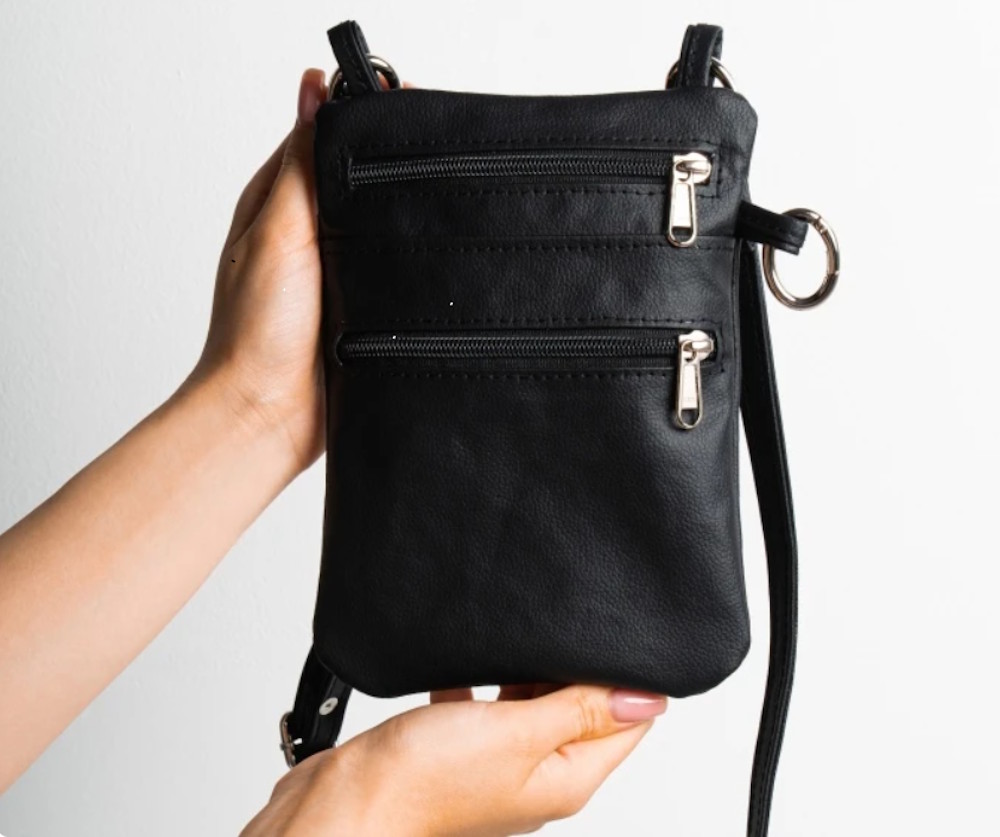
Who to offer it to and what to offer. Offer owners of everyday bags and backpacks cleaning in accordance with the manufacturer’s recommendations, help choosing a removable strap, or replacement of a decorative keychain. You could also sell a small range of ready-made straps and organizers.
How to test it. Make a list of materials and jobs you know how to handle. Offer a few paid orders based on a photo, then agree on the final scope after inspecting the item. When accepting it, record its condition, existing defects, the agreed work, and the collection date together with the customer. Publish photos of the results only with the owner’s consent.
What to spend money on. Products suitable for the chosen materials, cloths, protection for the work area, a few accessory samples, packaging, and your own time.
Main limitation. Unsuitable care can damage an item. Limit intake to materials you know, agree to a test on an inconspicuous area, and do not accept complex coating restoration or repairs to load-bearing fasteners without the relevant skills.
2. Caring for houseplants while their owners are away

Who to offer it to and what to offer. Offer residents of one neighborhood visits to their homes to water specific plants according to an agreed schedule. An initial package could include a set number of visits, a photo after each visit, and a message about noticeable changes in the plants’ condition.
How to test it. Offer a paid trial visit while the owner is present. Label the pots, record the amount and frequency of watering for each plant, and agree on access to water, key handover, and a contact to call if a problem arises. For the first test, choose a compact route so you can measure the time, including travel.
What to spend money on. Transport, simple tools, cleaning them, surface protection, and time spent reporting back.
Main limitation. A plant’s condition depends on many factors, so do not promise to restore it. Agree separately on what to do in case of a leak or pests; do not include repotting or plant protection treatments in the initial package. Store keys without address labels, and do not use photos of the home in advertising.
3. Workspaces where people can bring their dogs

Who to offer it to and what to offer. Offer remote workers a workspace with a desk, power outlet, and internet access for a few hours, where their dog can stay nearby. The owner stays with the animal for the entire visit; caring for the dog is not part of the service.
How to test it. Arrange trial sessions in suitable premises whose owner allows this format. Start with individual bookings to assess noise, cleaning, and working comfort. Send the access rules before payment and get confirmation that the customer accepts them.
What to spend money on. Hourly use of the premises, furniture, cable protection, water, individual bowls, surface cleaning, ventilation, and an administrator’s time.
Main limitation. An animal’s behavior may disturb others or create a hazard. Require advance booking, limit the number of visitors, require owners to control their dogs, and keep dogs on a leash in shared areas. Provide for ending a session in case of aggressive behavior, set rules for cleaning up after the animal, and clean the space between bookings. Keep passageways clear, notify visitors in advance that animals are present, and do not accept dogs showing visible signs of illness. Exclude feeding other people’s animals, veterinary procedures, and leaving dogs without their owners from the initial format.
4. Selecting stationery for left-handed people, with samples to try
Who to offer it to and what to offer. Offer adults who write or work with their left hand help choosing scissors, pens, and notebooks for their particular task. The offer could include a brief demonstration and the sale of selected products.
How to test it. Buy a few demonstration samples clearly identified by the manufacturer as suitable for left-handed users. Arrange appointments and take orders for specific models at a known price and delivery time. Record which products people buy after trying them.
What to spend money on. Samples, delivery, a place to demonstrate them, and a small stock of the most frequently ordered products.
Main limitation. Comfort depends on the user. Let people try the product themselves, do not promise to improve their handwriting, and do not build up a large stock based only on verbal approval.
5. Kits for organizing a desk
Who to offer it to and what to offer. Offer owners of home workspaces a set of ready-made reusable cable ties, holders, and cable labels selected based on a photo. Installing these accessories without modifying electrical equipment could be an additional service.
How to test it. Make one demonstration kit. For an order, ask for a photo of the desk, its surface dimensions, and a list of cables, then agree on the contents and total price. Offer a few paid installations and measure the time from the initial messages to completion.
What to spend money on. Ready-made accessories, samples of fasteners, packaging, travel, and working time.
Main limitation. A fastener may not suit the surface, and pulling cables tight can damage them. Agree on the fastening method, keep connectors and ventilation accessible, and do not include repairs to outlets, power supplies, or wiring.
6. Digitizing small family photo archives
Who to offer it to and what to offer. Offer owners of printed photographs scanning of a small batch, clear file names, and organization into folders according to the customer’s labels.
How to test it. Show a sample using your own photographs. For the first order, record the number of originals and agree on scan quality, file format, transfer method, and return date. First send a few sample files so the customer can confirm the expected result.
What to spend money on. Access to a scanner, cleaning the work surface, data storage media, and time spent organizing files.
Main limitation. You will be handling private images and irreplaceable originals. Do not use them in a portfolio without permission, agree on how long to retain the digital copy, and delete it after that period. Exclude fragile, stuck-together, or damaged photos from the initial service.
7. Short-term rental of tabletop display stands for fairs
Who to offer it to and what to offer. Offer makers and small shops that attend one-day events a set of ready-made tabletop stands for postcards, jewelry, or small accessories.
How to test it. Assemble one set and show its dimensions, contents, and setup method. Take paid bookings for specified dates and record the condition at pickup and return. Agree separately on delivery, lateness, damage, and the terms for returning a security deposit if you use one.
What to spend money on. Stands, transport containers, cleaning, storage, delivery, and time spent inspecting them.
Main limitation. Demand may fall on the same dates, and transport costs may account for a significant share of the order value. Start with customer pickup or one neighborhood; use sturdy products with known load limits.
8. Reusable gift wrapping made from ready-made textile products
Who to offer it to and what to offer. Offer gift buyers and small shops wrapping in ready-made fabric bags or scarves, with a card showing how to reuse them.
How to test it. Prepare a few samples for specific box sizes. Offer wrapping by advance booking or take orders through a partner shop. Track sizes and colors separately to see which options people actually buy.
What to spend money on. Ready-made textile products, ribbons, cards, delivery, and wrapping time.
Main limitation. Too many colors and sizes create excess stock. Start with a narrow range, do not cover important product labels, and do not promise specific environmental benefits without evidence about the product’s properties.
How to test demand before making large expenditures
Step 1. Write down the test conditions before your first advertisement
The business owner should define one offer, one buyer group, an area or delivery method, the test period, and maximum spending. Include the usual amount of work in the price, and price any additional tasks separately. State how many orders you can realistically fulfill without lowering quality.
Example test criteria: Over 14 days, receive at least five paid and completed orders from different buyers, spend no more than UAH 1,000 on attracting customers, and meet your target hourly pay for your own work. These are possible conditions for one test and should be adapted to the price and complexity of your service.
Step 2. Talk to potential buyers
Ask people to describe the last time they had the relevant need: how they dealt with it, how much time they spent, what they bought, and what remained inconvenient. Then show them a specific offer with a price. Questions about past behavior will help you define the service more precisely, while an invitation to place an order will show whether the person is ready to act now.
Step 3. Open bookings for a limited number of orders
In your advertisement, state what the service or product includes, the total price, available dates, service area, payment process, cancellation terms, and refund terms. If you do not yet have the product, clearly describe the offer as a pre-order and agree on a delivery time. Limit the number of places to what you can realistically fulfill.
You can collect the first inquiries through your own page, a local community in accordance with its rules, or a partner shop by agreement. Manually tag the channel for each inquiry so you can later compare spending with the orders received.
Step 4. Distinguish interest from paid demand
- A view or like shows a reaction to a post.
- A question about price or date shows concrete interest, but no purchase has yet taken place.
- A booking without payment gives you a way to assess intent and cancellation frequency.
- Payment or prepayment indicates a financial commitment from the customer; cancellations are still possible before the order is fulfilled.
- A completed paid order gives you data on actual costs, results, and complaints.
Record a refundable deposit for a rented item separately from the rental fee. Track orders from people you know separately, especially if they received a discount: their willingness to support you may differ from that of other buyers.
Step 5. Record work and costs after each order
In one spreadsheet, record the date, inquiry channel, quoted price, payment, fulfillment status, materials, delivery, working time, and returns. The owner or employee responsible should enter the data that same day, while they still remember extra trips and repeat tasks.
Include messaging, purchasing, preparation, cleaning, handover, and handling complaints in working time. After several orders, check whether the actual time matches the amount you included in the price.
How to calculate the result, including pay for your own work and returns
Calculate revenue and expenses per unit sold or order fulfilled. Add up the expenses for the entire test separately: advertising, samples, rent, and other payments. Unsold saleable goods remain in stock, but the money to purchase them has already been spent.
Example. An entrepreneur sold ten desk-organization kits for UAH 600 each. One buyer returned a kit and received a full refund of UAH 600. The returned item is suitable for resale, and its purchase cost is UAH 300. All amounts below are for illustration.
| Item | Calculation | Amount |
|---|---|---|
| Revenue after refund | 10 × 600 − 600 | UAH 5,400 |
| Purchase cost of nine kits sold | 9 × 300 | UAH 2,700 |
| Packaging used | 10 × 20 | UAH 200 |
| Payment processing costs | Illustrative actual amount | UAH 120 |
| Delivery paid by the seller | Illustrative actual amount | UAH 200 |
| Owner’s labor | 6 hours × UAH 200 | UAH 1,200 |
| Additional processing of the return | In addition to the six hours shown | UAH 80 |
| Advertising | Test expense | UAH 600 |
| Result before fixed costs and taxes | 5,400 − 5,100 | UAH 300 |
| Share of fixed costs for the test period | Illustrative amount | UAH 400 |
| Result before taxes | 300 − 400 | −UAH 100 |
The returned kit, worth UAH 300, remains in stock. If it has to be discounted or written off, the result will worsen. Add taxes and other mandatory payments in accordance with the entrepreneur’s operating arrangements; this calculation is not a final net profit figure.
Under these conditions, the owner should review the price, kit contents, customer acquisition costs, or fulfillment time before the next purchase. Simply increasing the number of orders will not remove costs that recur with every sale.
Tracking a trial batch of goods in Torgsoft: stock, prices, and returns
To sell straps, stationery, organizers, or textile wrapping, use “Склад → Стан складу” in Torgsoft (Warehouse → Stock status): it displays the quantity, selling price, and cost of received goods. A “Центр обліку” (accounting center) is a store or warehouse in the program. If there are several, turn on “Усі склади” (All warehouses) and use “Вибрати склади” (Select warehouses) to keep the ones you need. For the test, it is practical to give different sizes and models distinct names so you can compare stock with the physical inventory at the end.
If there is a discrepancy, select the required store or warehouse and product, then open “Рух товару” (Item movement) or “Картку складського обліку” (Stock accounting card): the latter shows the balance at the current warehouse after receipt, sale, return, and internal transfer. For items you decide to replenish, set a minimum stock level and use the “Закінчується товар” (Low stock) filter. Before discounting an item, compare its price with its cost; decide on the next purchase based on actual sales and returns. Add the owner’s time, advertising, and delivery to a separate test calculation.
When to continue, change the offer, or stop the test
On the specified date, the owner should compare the results with the initial criteria. First check completed paid orders, expenses, and reasons for refusals, then decide whether to invest more money.
- Continue on a small scale if buyers pay the agreed price, you complete work on time, and revenue covers the costs included in your calculation and the desired pay for your work.
- Change one condition and repeat a limited test if you receive inquiries, but people identify a specific obstacle: inconvenient timing, delivery, kit contents, or price. Changing one parameter will help you understand its effect.
- Stop investing further if you reach the maximum budget, do not receive the planned payments, or every order costs more to fulfill than the price allows.
- Pause accepting orders if you identify a risk of damage to someone else’s property, danger to visitors, or a quality issue you cannot yet fix.
If you decide to end the test, close new bookings, fulfill your agreed commitments or arrange refunds, return customers’ belongings, and count the remaining stock. For your next attempt, retain specific findings: who bought, at what price, how long fulfillment took, and which costs need to change.


 Go back to the previous step
Якими б не були бізнеси в Україні, одним із найкращих завжди буде бізнес, який пов'язаний з надрами. Це дуже прибуткова справа. Все що потрібно мати для цього - це необхідні документи.