


Advertising for a children’s store should help families choose a product by showing its purpose, features, price, and conditions of use. Explain the specific benefit to parents, take the child’s preferences into account, and do not encourage the child to buy or ask someone else to make a purchase. Ukrainian law also prohibits creating a sense of inferiority, promising an advantage over other children, or claiming that every family can afford the product.
Before launching an ad, the store owner should approve an accurate product description, assign an employee to verify the price and availability, and ask the person responsible for advertising to review the text, images, labeling, and promotion terms. For communicating with customers, it is advisable to use only the minimum contact details of an adult who has agreed to receive the relevant messages. Children’s questionnaires, dates of birth, and photographs require a separately defined lawful purpose and an appropriate legal basis.

How to find out what matters to parents and children
Start with situations in which the product will be used: clothes for everyday wear at kindergarten, shoes for walks, an art set for use at home, or a gift within a specified budget. This approach helps you create a clear offer without assuming that all children of a certain age have the same interests or use the same digital services.
Suggest that sales staff ask adults a few questions during consultations:
- For what situation are you choosing this product?
- What was inconvenient about your previous purchase?
- Which features are essential: size, material, care instructions, or contents?
- What price range should we show you?
- What information do you need to make a choice?
An employee can summarize answers without names, phone numbers, or details about a specific child. For example, they can record the number of requests for a particular size or common questions about care. The owner reviews these notes once a week and decides which features to add to product listings, what to show in videos, and which items to order.
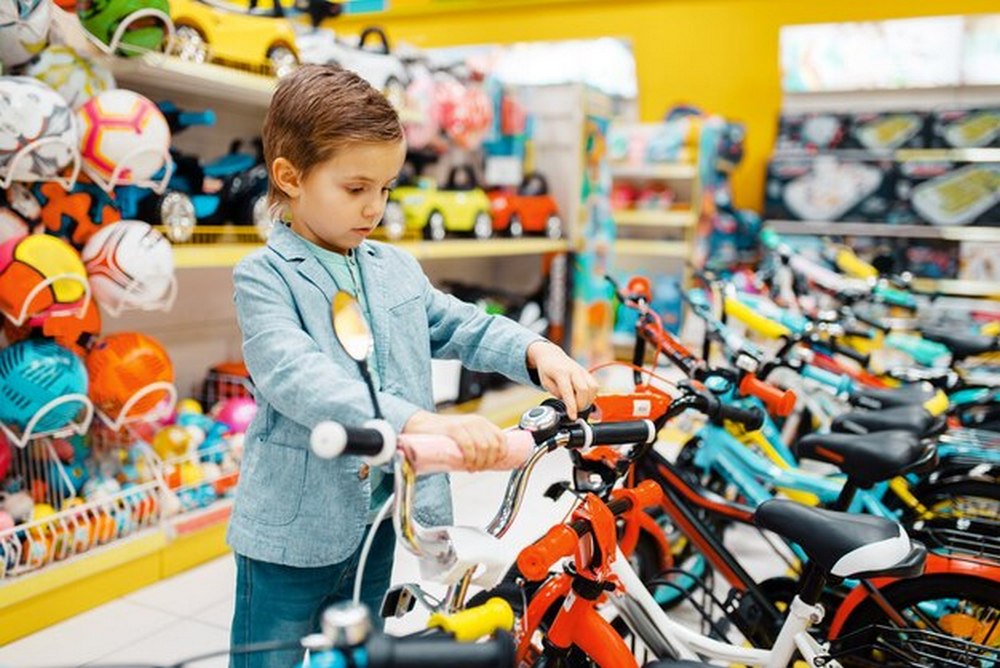
During a visit together, a salesperson can invite the child to compare colors or designs among options approved by the adult. Address the call to action in an advertisement to the adult: review the features, compare what each product option includes, or check whether a size is available.
At the same time, do not set a general rule that children can never make purchases on their own. Under Articles 31–32 of the Civil Code of Ukraine, persons under 14 may independently enter into minor household transactions—low-value purchases that meet their everyday needs and are appropriate to their development. Persons aged 14 to 18 have broader rights and may, among other things, independently use their earnings, scholarship, and other income, unless a court has restricted this right. For other transactions, the law requires the consent of parents, adoptive parents, or custodians. These rights do not remove advertising restrictions on addressing children.
How to turn product features into a clear benefit
Build the message in this order: product feature, how it is used, an important condition, and an action for the adult buyer. Each claim must match the specific model. If you describe the material, care, age recommendation, or contents, check them against the labeling and the manufacturer’s documentation.
Articles 7 and 10 of the Law of Ukraine “On Advertising” require advertising to be accurate and truthful and prohibit unfair advertising. So instead of making general promises about developing intelligence, guaranteeing success at school, or absolute safety, explain exactly what the buyer receives and how to use it.
The examples below are hypothetical. Use them only for products with the corresponding features.
| Product and need | Example advertising message | What the employee should verify |
|---|---|---|
| Clothing for everyday use | “Trousers with an adjustable waistband. Review the measurements and care instructions to choose a size.” | That the waistband is adjustable, the measurements for the specific model, the composition, and care instructions. |
| Art set for use at home | “Drawing set: paper, pencils, and stencils. The product listing gives the full contents of the set and the age labeling.” | The actual contents, the manufacturer’s labeling, and any warnings. |
| Gift within a specified budget | “A selection of gifts with prices and descriptions of what each product includes. Choose the price range that works for you.” | That each product falls within the stated range and that prices are current. |
| Shoes to try on in store | “Check the available sizes and confirm availability at the store you need before your visit.” | That the specific size is in stock at the specific store. |
Describe interests through activities: building, drawing, reading, and active games. Do not assign abilities or desired roles based on a child’s gender. When helping someone choose a toy, use the manufacturer’s age labeling and warnings, but do not turn them into a promise of the same outcome for every child.
Advertising restrictions concerning children
For advertising distributed in Ukraine, apply Article 20 of the Law of Ukraine “On Advertising”. The employee responsible must review the entire advertisement: its words, voice, images, animation, and the behavior of characters.
- Do not address children with a call to buy a product or ask third parties to buy it. This also applies to asking them to approach their parents. For an adult audience, use actions that help them choose a product: compare, check, or review the description.
- Do not undermine the authority of adults whom a child trusts. Remove storylines that disparage parents, guardians, custodians, other legal representatives, or teachers because they refused a purchase or gave advice.
- Do not associate owning the product with an advantage over other children. Show its features and ways to use it without promising popularity, recognition, or higher status among peers.
- Do not create a sense of inferiority. Avoid storylines in which a child is shamed, rejected, or humiliated for not having the product. Advertising must not cause moral or physical harm to children.
- Do not assume that all families have the same financial means. For a product intended primarily for children, you may not claim that every family can buy it regardless of budget. State the specific price and terms.
- Do not show children in dangerous situations. Remove scenes that could cause harm to a child or other people if repeated, as well as content that encourages a dismissive attitude toward threats to life and health.
- Do not show children using products intended only for adults or products that the law prohibits children from buying or consuming.
- Do not use images showing the use of real or toy firearms or explosive devices. The prohibition also covers graphic depictions, including drawn characters.
The law provides exceptions to the last prohibition. Part One of Article 20 permits relevant public service advertising containing information useful to society for preventing offenses, ensuring state sovereignty, security, and defense, and promoting patriotic education. Part Six also provides an exception for public service advertising aimed at promoting paramilitary and military formations within state bodies and patriotic education, as well as for advertising and announcements of audiovisual works. These exceptions apply specifically to the restriction on the images described above. A store cannot apply them to ordinary product advertising merely because it uses a themed design.
Also follow the general requirements in Article 8: advertising must not encourage disregard for safety, contain discrimination, or demean people who do not use a product. For a children’s store, the practical implication is simple: show the product being used appropriately, and do not judge a buyer’s worth by their choice.
How to prepare an advertisement, discount, or collaboration with a content creator
Under Article 9 of the Law of Ukraine “On Advertising”, advertising must be clearly distinguishable from other information. Material that draws attention to a product and is distributed for money or other compensation must be labeled with the word “реклама” (“advertisement” in Ukrainian). So, when agreeing on a video or post with a content creator, specify where this label will appear, which product claims are allowed, and how the publication will be approved. Providing a product as compensation also requires proper identification of the advertising material.
If you announce a price reduction or sale, state the location, start and end dates, and either the discount amount or the ratio of the new price to the previous price. These requirements are set out in Part Four of Article 8. Audio media advertising has a special rule: it must name the source of information about the discount or sale terms. Prices in advertising for products sold in Ukraine must be stated in hryvnias.
Hypothetical calculation example: A set previously cost UAH 800, and the discount is 15%. The buyer saves UAH 120 and pays UAH 680. In a real advertisement, the responsible employee must verify the previous price, add the specific product, location, and exact promotion dates, and then confirm that the sale price matches the advertised offer.
For an advertised workshop, contest, or prize draw, Part Three of Article 8 requires you to state the dates, location, and source of the full terms. In audio media, it is sufficient to name the source of information about the terms, dates, and location. Changes must be announced in the same way as the initial terms. In practice, the organizer should determine in advance how people will register, the event’s capacity, whether an adult must participate, and the rules for using materials safely.
How to arrange displays and demonstrations in the store
Group products so that buyers can compare their purpose, contents, and price. Place the features and warnings needed to make a choice next to the display item. Prepare measurements for clothing, a list of components for sets, and manufacturer information about age and conditions of use for toys. The salesperson should know where to find this information and not replace it with personal promises.
Part Seven of Article 8 of the Law of Ukraine “On Advertising” does not treat information about a manufacturer or product at the point of sale as advertising. This includes information on equipment, store displays, the product itself, or its packaging. Showing such information while a purchase is being completed on an online store website is also not considered advertising. Assess each placement individually: this exception does not mean that every online post by a store automatically ceases to be advertising.
Before a demonstration, the employee should prepare the area, remove hazardous objects, and follow the product’s conditions of use. If the store records a demonstration for advertising, also assess whether a child might repeat the actions shown. An adult appearing in the frame does not in itself make a dangerous scene safe.
How to collect contact details without unnecessary data about children
Under Articles 6 and 11 of the Law of Ukraine “On Personal Data Protection”, a store must define a specific lawful purpose and legal basis for processing, and the data collected must not be excessive. Consent is one of the legal bases provided by law. Data needed to fulfill an order should not automatically be used for another, incompatible purpose.
A small store can set up an optional subscription for adults to receive the messages they choose:
- Define the subscription content. For example, notifications about new clothing or family events. People should understand what they are agreeing to.
- Collect the minimum amount of data. An email address is sufficient for email messages; do not add mandatory fields about a child unless necessary.
- Provide information at the time of collection. Name the business or company responsible for the data, the data collected, the purpose of use, the recipients, and the buyer’s rights. Article 12 requires this.
- Keep a record of the person’s consent. Record when and how the person agreed and what messages they agreed to receive. An employee entering a phone number does not confirm the customer’s consent.
- Provide a way to opt out. Explain clearly how to withdraw consent and assign an employee to handle such requests. Article 8 provides for the right to withdraw consent.
- Set retention periods and access rules. Keep personal data no longer than needed for the lawful purpose and give employees access according to their duties.
Do not create children’s profiles, record dates of birth, or collect photographs just because they might be useful for future advertising. An adult’s consent to receive offers on their own phone is not, by itself, a basis for any processing of a child’s data. If the business truly needs such information, separately define the purpose, necessary data, and appropriate legal basis, including the authority of the person acting on the child’s behalf.
The use of a person’s name or image in advertising is also governed by Item 9 of Part One of Article 8 of the Law “On Advertising”: written or electronic consent is required from that person or from other persons whose consent is obtained in accordance with the procedure established by law. The law provides specific exceptions, including paid modeling and certain announcements of audiovisual works under the prescribed conditions. For an ordinary publication of photographs of customers from a children’s event, arrange proper approval to use the child’s image through their legal representative. Registration for the event or consent to receive mailings does not replace this approval.
Customer purchase history and size availability in Torgsoft
In the “Маркетинг → Клієнти” (“Marketing → Customers”) menu, open the adult customer card. The purchases tab shows purchases and returns recorded in transactions associated with that customer. A salesperson can use this history during a consultation, for example to ask about a previous model, but should ask the buyer about their current needs. The “Інше” (“Other”) tab has separate checkboxes for consent to short text messages (SMS) and emails. Employees must set them according to the consent actually received; a checkbox in the software does not replace obtaining consent.
Before advertising a specific model, open “Склад → Стан складу” (“Warehouse → Stock Status”) and check the size, quantity, and price. In Torgsoft, a “Центр обліку” (“accounting center”) is a store or warehouse for which inventory is tracked. If you operate several locations, enable “Усі склади” (“All warehouses”) and use “Вибрати склади” (“Select warehouses”) to choose the required accounting centers. Make sure that no stock filter is set to a past date. The employee gives the person responsible for advertising a list of models and sizes available at the stated point of sale; if it differs from the actual stock, first find out why.
How to test a message and prepare it for publication
For a trial campaign, choose one product group and one customer need. Prepare two ads that explain the benefit differently, while keeping the product, price, and terms the same. For example, one clothing ad could explain an adjustable fit, and the other could explain how to care for the item. Show them to an adult audience and compare inquiries over equal periods of time and with comparable spending.
Record how many people asked about availability, came to try on the item, and bought it. During an inquiry, a salesperson can voluntarily ask which ad the customer saw and summarize the answers without creating children’s questionnaires. A small test can help identify unclear wording, but it does not guarantee the same result in the next campaign.
Before publication, the owner or assigned employee should go through this short checklist:
- Each feature matches the specific product, and claims do not go beyond what the store can substantiate.
- The text and video do not pressure children, urge them to buy or ask someone else to buy, promise an advantage, or assume that every family has the same budget.
- All scenes meet safety requirements and the restrictions in Article 20.
- The price, sizes, and stock match the stated point of sale.
- The advertising is properly labeled, and a discount, contest, or event includes the required terms.
- There is an appropriate legal basis for using names and images, and the subscription form explains the purpose of collecting data.
After launch, the assigned employee should monitor customer questions and stock changes. If an ad continues to promise an unavailable size, an incorrect price, or a promotion that has ended, it must be corrected or stopped.
Official legal sources
- Law of Ukraine “On Advertising” dated 03.07.1996 No. 270/96-ВР: Articles 7–10 on accuracy, general requirements, discounts, promotional events, and advertising identification; Article 20 on restrictions concerning children and specific exceptions.
- Law of Ukraine “On Personal Data Protection” dated 01.06.2010 No. 2297-VI: Articles 6, 8, 11–12, and 14 on the purpose and scope of processing, individual rights, legal bases, notice, and dissemination of data.
- Civil Code of Ukraine dated 16.01.2003 No. 435-IV: Articles 31–32 on independent transactions by persons under 14 and persons aged 14 to 18.


 Go back to the previous step