


Start improving your online store by checking stock, the full purchase price, and delivery and return terms. Then go through checkout on a smartphone and check whether product pages provide enough information. This will help you identify specific problems to fix before spending more on promotion.
Here is a plan with seven practical areas for a small store selling goods in Ukraine to individuals for personal use. The legal explanations are based on Ukrainian law. The general rules cited from the Law of Ukraine “On Consumer Rights Protection” primarily apply to non-food products: under Article 1-1, the Law applies to food products only in cases expressly provided for in it. For a food assortment, check the separate requirements for product safety and information.
Definition of a consumer and scope of the Law. The workflow, tests, and management metrics below are recommendations for the owner. Assess changes by orders customers have received and paid for, and by the amount left from sales after the cost of goods and variable costs for those orders. We will call this amount the contribution. Use subscriber numbers only as supporting information.

Illustration of interior design; the environmental qualities of products require separate verification.
1. Reconcile stock and set order handling rules
To start, we recommend checking the physical availability of products that are ordered or advertised most often, or whose orders are most often canceled because they are out of stock. Check each combination of model, size, and color separately. If there are two identical items on the shelf but one has already been set aside for a customer, staff should be able to see how many units are still available to offer.
Assign someone to be responsible for stock and write down short rules for handling orders. They should be consistent across the website, phone, and social media messages:
- When staff check availability and reserve an item.
- How long a reservation lasts and how the customer is told about this period.
- Who verifies payment before packing.
- When an item becomes available again after cancellation or return.
- Who tells the customer about a stock shortage and agrees on what happens next.
If you track reservations manually, use one shared list with the order number, SKU, quantity, deadline, and person responsible. Reconcile it daily against unpaid and unshipped orders. Record what to do if the website or accounting software is temporarily unavailable: who records sales and who later enters them into the accounts.
Under Part 6 of Article 13 of the Law of Ukraine “On Consumer Rights Protection,” a seller must immediately notify a consumer if it cannot perform the contract because the product is unavailable, and no later than thirty days after receiving the consumer’s consent to conclude the contract. For day-to-day operations, we recommend notifying customers about a shortage as soon as it is confirmed. If you offer a different model, record the customer’s agreement.
The Law also sets conditions for a permitted standard substitution: the replacement must suit the intended use, be of equal or better quality, and cost no more than the agreed price; the customer must be informed in advance that the contract includes this condition. Article 13 of the Law.
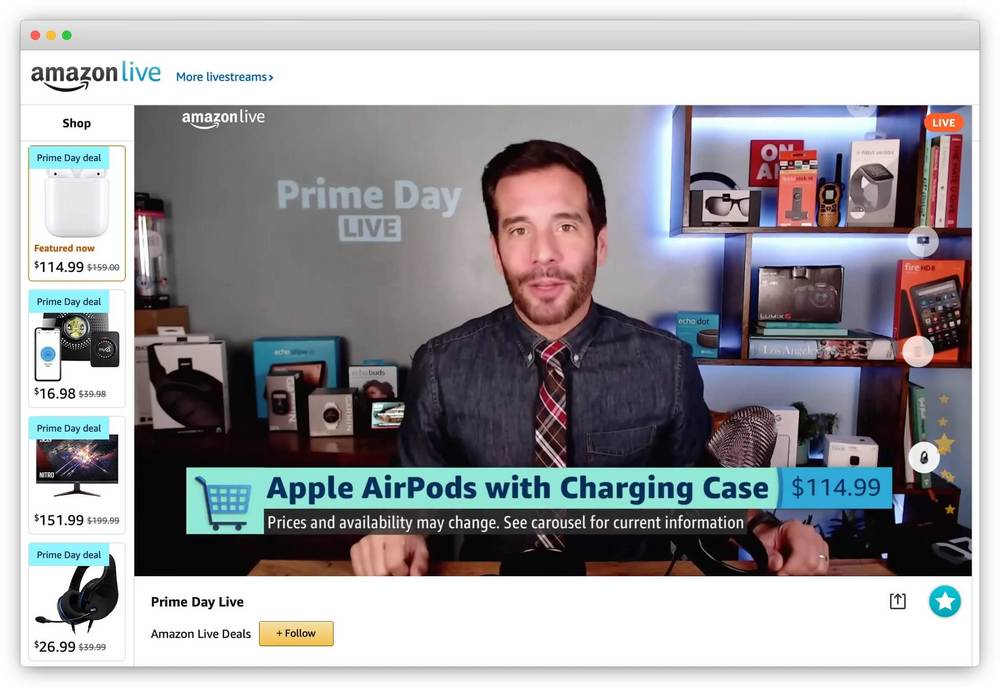
Illustration of a product video presentation format. The availability of specific tools depends on the platform and country.
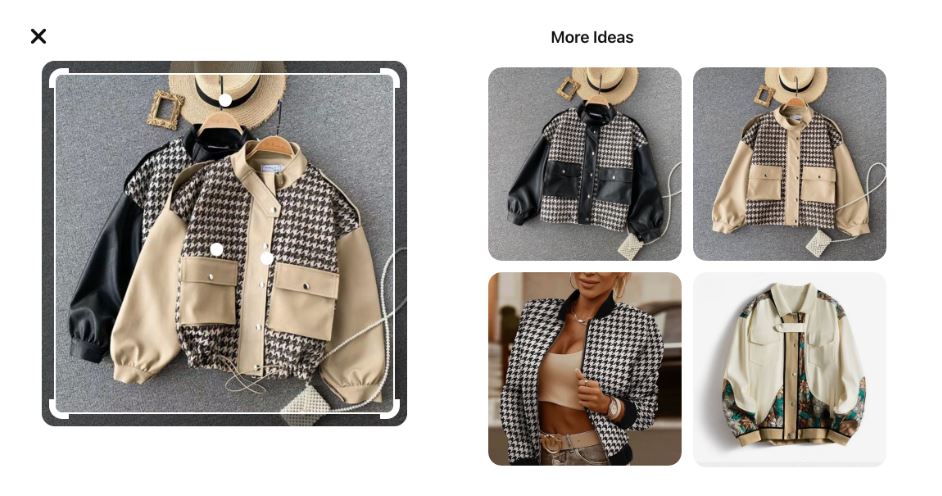
Illustration of image search; the interface may look different.
2. Add to product pages and check search
Use customer questions from messages and the reasons for returns. For each popular product, check whether its page answers these questions before the customer places an order. We recommend listing the exact name, SKU, available options, measurements with units, material, what is included, compatibility, care instructions, and any usage limitations that apply to the product.
Photos should show the exact option the customer selects. For example, a bag listing could include views of the inside, the fastener, and the dimensions; a light fixture listing could show the mounting hardware and what is included. It is worth testing a short original video for products that customers regularly ask about assembling or using. Label what the video shows and say if an additional accessory is sold separately.
Articles 4 and 15 of the Law of Ukraine “On Consumer Rights Protection” require sellers to provide necessary, accessible, accurate, and timely information about products in Ukrainian before purchase. Check the main properties, quantity, price, terms of purchase, date of manufacture, storage conditions, warranty obligations, and rules for effective and safe use. Also check the expiry date or service life, actions required after it ends and the possible consequences of not taking them, and the names and addresses of the manufacturer, seller, and business that accepts claims, repairs, and services the product.
Include any required information about harmful substances and warnings for the product. If special regulations govern information for your product category, follow them; apply the general requirements of Article 15 where the special rules do not cover the issue. Check descriptions against the manufacturer’s documentation and requirements for your assortment. Article 15 of the Law.
To check search, compile a list of real queries from customer messages: product name, SKU, everyday name, and product feature. Try each query on the website and check the results and filters. If your platform lets you add synonyms, test them in one category. Review searches with no results separately: staff should determine whether the product, a correct name, or a search setting is missing.
3. Simplify mobile checkout and explain payment
Make a test purchase on a smartphone: find a product, choose an option, change the quantity, enter an address, and proceed to payment. Check whether the total is visible, whether errors can be corrected, and whether entered details are saved after a failed payment. Also check what happens if the customer presses the confirmation button more than once.
We recommend making mandatory only the fields needed for the chosen delivery method and performance of the contract. If the platform supports guest checkout without creating an account, test that route. Part 4 of Article 7 of the Law of Ukraine “On Electronic Commerce” allows a seller to request only the information necessary to conclude and perform an electronic contract. Article 11 also provides for the technical ability to change submitted information before accepting an offer. Articles 7 and 11 of the Law.
Next to each available payment method, explain its actual terms: when payment is due, whether a prepayment is required, who charges a fee, and who pays it. State the delivery and cash-on-delivery charges, if applicable. If the rate depends on the address, weight, or dimensions, arrange to calculate and agree on the cost before concluding the contract. Do not show a payment method the store does not actually accept.
Under Article 7 of the Law of Ukraine “On Electronic Commerce,” a seller must provide direct, simple, and stable access to the full name of the legal entity or the sole proprietor’s surname, first name, and patronymic; the legal entity’s registered address or the sole proprietor’s place of registration and actual residence; email and/or the online store address; and the identification code or taxpayer registration card number.
For a sole proprietor who has officially refused such a number due to religious beliefs and has the corresponding passport notation, the passport series and number are provided. If the activity requires a license, the information about the license specified in the Article must also be published. Buyers must be able to access information on whether taxes are included in the product price and on delivery costs.
The product price must include all taxes and mandatory non-tax payments that the customer pays when purchasing it. Part 3 of Article 15 of the Law of Ukraine “On Consumer Rights Protection”. Payment methods, deadlines, and procedures are set out in the electronic contract in accordance with Ukrainian law. The buyer must receive a document confirming receipt of funds. Set up proper payment recording and issuance of a payment document for your payment method.
Articles 7 and 13 of the Law “On Electronic Commerce”.
4. Send delivery updates at each important stage
We recommend stating the store’s order preparation time separately from the estimated transit time. Specify the order cut-off time for dispatch, business days, and rules for products supplied to order. If you promise same-day dispatch, staff should be able to verify stock, payment, and the time the parcel will be handed to the carrier.
Prepare messages confirming receipt of the order, the agreed terms, and dispatch. The confirmation should list the products, options, quantity, price, payment and delivery methods, and a contact for inquiries. Separately, provide the documented confirmation required under Part 11 of Article 11 of the Law of Ukraine “On Electronic Commerce”: the buyer must receive it when the transaction is made or the goods are handed over.
It must include the terms and procedure for exchange and returns, the seller’s name and address, the procedure for submitting claims, warranty obligations, and information about product maintenance or repair services; for a contract with no specified term, it must also include the procedure for terminating it. Send the tracking number after handing over the parcel. If the timing changes, provide an update and agree on what happens next.
Article 11 of the Law of Ukraine “On Electronic Commerce” requires prompt confirmation of an order’s receipt. Parts 2–3 of Article 13 of the Law of Ukraine “On Consumer Rights Protection” require information about price, delivery, payment, warranties, and the procedure for terminating the contract, with written or electronic confirmation. The seller may not unilaterally change the confirmed information. Unless the distance contract provides otherwise, the goods must be delivered within a reasonable period, but no later than thirty days after receiving the consumer’s consent. Article 11; Article 13.
5. Organize returns and handle customer claims
Create an accessible page with contact details, the address for sending goods, how to submit a claim, and what happens next. For staff, we recommend keeping a log with the order number, date of contact, customer’s request, product condition, person responsible, agreed deadline, and outcome. This will make it possible to check that each request is handled.
Before considering a claim about a defect, check the date from which the warranty is calculated. Under Article 7, for distance sales where the contract is concluded and the goods are handed over on different days, the warranty period begins when the goods are handed over to the buyer. If the goods require special installation, connection, or assembly, it starts when that work is completed.
If the relevant date cannot be established, the period is calculated from the date the contract was concluded. Seasonal goods are subject to rules on when the relevant season begins. If no warranty period or expiry date has been set, the buyer may make relevant claims if defects are found within two years of the goods being handed over. The warranty is extended by the repair period, calculated from the date the customer requests correction of defects, and starts anew after a replacement.
In your rules for sales to consumers in Ukraine, explain these three situations separately:
Exchange of a non-food product of proper quality under Article 9. A buyer has the right to exchange a product for a similar one with the seller from whom it was purchased if the product does not suit them in shape, dimensions, style, color, or size, or cannot be used for its intended purpose for other reasons. The period is fourteen days, excluding the day of purchase, unless the seller has announced a longer period.
The product must not have been used; its appearance, consumer properties, seals, labels, and the payment document required by law must be preserved. The Cabinet of Ministers of Ukraine has approved a list of exceptions. If no similar product is available for exchange, the buyer may choose another product with a price adjustment, terminate the contract and receive a refund, or agree to exchange the product when a similar one first becomes available.
If the buyer chooses to wait for an exchange, the seller must notify them on the day a similar product arrives. If the buyer chooses to terminate the contract, the seller refunds the purchase price on the day the contract is terminated. Only if it is not possible to refund the money that day may the parties agree on another deadline, which must be no later than seven days.
Termination of a distance contract under Article 13. A consumer may terminate a distance contract by notifying the seller within fourteen days of receiving confirmation of the information, or of receiving the goods or the first delivery. For tangible goods, returning the product also indicates termination of the contract. If the confirmation does not meet Part 3 of Article 13, the termination period is ninety days from receipt of that information, or, for tangible goods, from receipt of the goods or the first delivery.
If the seller provides corrected confirmation during that period, the buyer has fourteen days from receiving it. Unless the contract provides otherwise, the exceptions in Part 5 apply, including goods made or processed to order that cannot be resold to others or can be sold only at substantial financial loss. Merely ordering goods from a supplier does not in itself mean that this condition is met.
Under Part 7 of Article 13, Parts 5–9 of Article 12 also apply to distance contracts. The buyer tells the seller where the goods can be returned; the contract may provide for postal return of goods sent by post. The seller bears the costs associated with a return on this basis and must reimburse the buyer’s relevant costs. The buyer must keep the goods in unchanged condition, but opening the packaging, inspecting, or checking the goods does not by itself remove the right to terminate the contract.
This right also remains if the goods are damaged or spoiled through no fault of the buyer. The obligation to preserve the goods ends sixty days after receipt; if the seller takes no steps to retrieve them during this period, the goods become the buyer’s property without any obligation to pay for them. If the seller did not provide a document or confirmation of the information, the buyer notifies the seller that the contract is invalid, and the seller must refund the money and reimburse return costs within thirty days of receiving the notice.
This deadline applies specifically to failure to provide a document or confirmation. For delays in refunds beyond the prescribed deadlines, Part 9 of Article 12 provides for a penalty of one percent of the product price for each day. If the buyer was given credit for the amount payable under the contract, that credit becomes void when the contract is terminated. Parts 5–9 of Article 12 and Part 7 of Article 13.
For every distance return, we recommend recording the date of the buyer’s notice, their request, the amount to be refunded, and the staff member’s actions. Do not automatically apply the seven-day period in Articles 8 and 9 to all distance returns.
Claims about goods of improper quality under Article 8. If defects are found during the warranty period, consumers may demand a proportional price reduction, free correction of defects, or reimbursement of the cost of correcting them. The seller must accept goods of improper quality. Part 11 of Article 8 provides for consideration of claims after the customer presents a payment document; for goods under warranty, they must also present the technical passport or a substitute document with the sale date noted.
This Part sets separate document requirements for medicines, medical devices, and technically complex household goods. Tell the buyer which documents are required for their product; a lost technical passport is restored under the procedure set by law. The buyer has the right to take part in the quality inspection personally or through a representative. A claim may be rejected if the seller or manufacturer proves the defects resulted from the buyer’s failure to follow the rules for use or storage.
For used non-food goods sold through consignment retailers, the Law provides for these claims to be satisfied with the seller’s consent if the warranty period has not expired. A separate rule applies to food products unfit for consumption: the seller must replace them with suitable products or refund the money. After the warranty period ends, the buyer may require the manufacturer or seller to correct defects caused by the manufacturer free of charge during the established service life or, if none has been set, within ten years.
If this request is not fulfilled within the periods set out in Part 9 of Article 8, the buyer may choose another remedy under Part 1 of that Article, subject to its conditions. If, during the warranty period, a substantial defect caused by the manufacturer, seller, or service provider is discovered, or the product is found to be counterfeit, the consumer may demand termination of the contract and a refund or replacement of the product; an expert opinion may be required to confirm these circumstances.
If the cause of a loss of product quality needs to be determined during the warranty period, the seller, manufacturer, or service provider must arrange an examination within three days of receiving the buyer’s written consent. The seller, manufacturer, or service provider pays for the examination initially. If the findings show that defects arose after the goods were handed over because the buyer violated the rules for use, storage, or transportation, or because of third-party actions, the buyer’s claims are not satisfied and the buyer reimburses the examination costs.
The buyer and the seller, manufacturer, or service provider may challenge the findings in court. Part 4 of Article 17 of the Law. “Substantial defect” has conditions defined by law: it makes the product impossible or unacceptable to use for its intended purpose, arises through the fault of the manufacturer, seller, or service provider, and recurs after correction for reasons beyond the buyer’s control.
In addition, at least one of these conditions must apply: the defect cannot be corrected, correction requires more than fourteen calendar days, or the defect makes the product substantially different from what the contract provides. When determining the basis for a claim, staff should check these conditions under clause 12 of Article 1. If the product is available, a replacement claim must be fulfilled immediately; if a quality inspection is required, it must be fulfilled within fourteen days or another period agreed by the parties.
If the product is unavailable, the replacement period is two months from the claim date. If replacement is not possible within the prescribed period, the consumer may make another claim allowed by law. When replacing a product with one of the same brand, model, SKU, and modification, a price change is not taken into account. When replacing it with a product of another brand, model, SKU, or modification, if the price has gone up, the value of the defective product is determined at the time of exchange; if the price has gone down, it is determined at the time of purchase.
The seller or manufacturer pays for delivery of bulky goods and goods weighing more than five kilograms to satisfy such claims and return them to the consumer. If the buyer requests free correction of defects, they must be corrected within fourteen days of the product being presented, or within another period agreed by the parties. Record the date the product is accepted for repair. The Law provides for a penalty of one percent of the product price for each day a repair is late.
If a stock of temporary replacement products is required for your product category, also take into account the buyer’s right, on written request, to receive a similar product with delivery while theirs is being repaired, and the penalty for delay in providing it. If the contract is terminated under Article 8, check the refund amount: if the price has increased, calculate it using the price at the time the claim is made; if it has decreased, use the price at the time of purchase.
Refund the money on the day the contract is terminated; if that is not possible, the parties may agree on another deadline, but it must be no later than seven days.
Before making a decision, staff should determine the basis for the claim, the product category, and the applicable conditions. Do not automatically apply exceptions to exchanges of products of proper quality to claims about defects. Compare your assortment with the lists in Resolution No. 172 of the Cabinet of Ministers of Ukraine: Appendix 3 lists goods that cannot be exchanged under Article 9, while Appendix 2 lists goods for which a stock of temporary replacement products is required during warranty repairs under Article 8. Record in your instructions which store items are covered by each list. Add the applicable rules to staff instructions. Articles 8, 9, and 13 of the Law “On Consumer Rights Protection”.
6. Invite repeat purchases with the customer’s consent
For marketing messages, we recommend collecting separate, voluntary consent: explain who will send messages, through which channel, and what they will cover. Do not preselect the consent box. Keep the date, method of consent, and consent text, and provide a simple way to opt out in every marketing message. After a customer opts out, the staff member responsible should exclude that contact from future campaigns.
Start with one relevant offer to a small group of customers who have agreed to receive it. For example, offer a compatible consumable for a purchased product, after checking compatibility. Keep messages about the status of an active order separate from marketing campaigns.
Track completed repeat orders, message costs, discounts given, and opt-outs. If you run a discount promotion, follow Article 15: it must run for a defined, limited period, the price must be lower than the usual price, and the customer must be told the price before and after the reduction. Parts 4–6 of Article 15.
7. Automate one recurring task and measure the result
Choose a task staff spend time on regularly: sending a dispatch notification, reminding someone to check an unpaid order, or preparing a list of products for a stock check. Record what triggers the task, where the system gets its data, and who reviews errors. Before launch, check whether your website and connected services support the required function and how much setup and use will cost.
First, test the process on a limited number of orders. We recommend keeping staff approval for product changes, disputed returns, and unusual payments. Account for the time needed to set up, check, and correct errors. If an automated message shows the wrong amount or status, pause it until the cause is fixed.
How to choose the first test and set a spending limit
Choose the row that matches the store’s most frequent problem. The test sizes below are recommended starting limits; adapt them to your order volume. Before launch, record the current metric, the person responsible, and the maximum spend in money and staff time.
| Problem | Solution | Data and prerequisites | Limited test | Metric and spending limit |
|---|---|---|---|---|
| The store cancels orders because products are out of stock | Reconcile stock and set reservation rules | SKUs, physical quantities, open reservations | Check one popular category for two weeks | Share of cancellations due to stockouts; do not expand advertising for the category until discrepancies are resolved |
| Customers often ask about product specifications | Improve product pages and check search | Questions, reasons for returns, product documentation | Update ten product pages and check real queries | Number of repeated questions and completed orders; limit the time spent preparing each page |
| Customers start checkout but do not complete it | Simplify the mobile form and show the full price | Tracking of started checkouts, errors, and confirmed payments | Change one step and check all available payment methods | Checkout completion rate; stop the test if orders are duplicated or payments are lost |
| Staff constantly answer questions about delivery | Clarify timeframes and send status updates | Preparation time, tracking number, current contact details | Use templates for the next twenty shipments | Number of status inquiries and handling time; pause messages with incorrect information |
| Return requests go unanswered | Assign a responsible person and keep a log | Basis for the request, documents, date of contact, deadlines | Handle the next ten requests using one procedure | Meeting deadlines and repeat inquiries; address missed obligations immediately |
| Marketing messages generate orders with large discounts | Test the offer with a group that has consented | Consents, cost of goods, discounts, sending costs | One offer to one small group | Contribution from repeat orders and opt-outs; stop the campaign when the approved budget is exhausted |
| A staff member repeatedly transfers the same data | Automate one task | Stable workflow, function support, error tracking | Process twenty orders with manual review | Time saved, minus review time; do not continue if the cost exceeds the agreed benefit |
Count completed orders and contribution after variable costs
For management accounting, we recommend counting an order as completed when the customer has received and paid for it. Track cancellations, uncollected parcels, and full and partial returns separately. Compare orders created in comparable periods and update their results after delivery and returns. This keeps unfinished purchases out of the total for successful sales.
For each order, record sales after discounts and returns, the cost of the goods sold, payment fees, packaging, the part of delivery paid by the store, and other variable costs. The gross difference between sales and the cost of goods does not yet account for all these expenses. To evaluate advertising, we recommend also deducting the costs of acquiring those orders using a chosen, consistently applied allocation method.
Illustrative example with figures. After a discount, the store receives UAH 1,200 for a product. The cost of goods is UAH 700, the payment fee is UAH 24, packaging is UAH 20, the store-paid share of delivery is UAH 60, and allocated advertising costs are UAH 120. The order’s contribution after these expenses is: 1,200 − 700 − 24 − 20 − 60 − 120 = UAH 276.
If the store offers an additional UAH 100 discount in this illustrative example and leaves all other expenses unchanged, the contribution is UAH 176. This calculation is before fixed costs and taxes, which are not included in the example. Future returns are also not included. In your own accounts, add actual costs for returns, uncollected parcels, and processing, and agree with your accountant on how to account for taxes.
After the test, compare total contribution, completed orders, and staff time spent. If you have few purchases, continue observing within the agreed budget. When testing one change, try to keep the assortment, prices, and advertising conditions comparable so you can assess its effect more accurately.
How to use Torgsoft for stock, sales, and returns
In Torgsoft, the “Стан складу” form (“Warehouse Stock Status”) shows product quantity, size, selling price, and cost. You can set a minimum stock level and filter for items that are running low. The stock card lets you track inventory at the current warehouse after a receipt, sale, return, or internal transfer. To start, we recommend using this data to reconcile popular items and check the reasons for discrepancies. Your way of working must match your license: according to the official license comparison, “Старт” (“Start”) is not suitable for an online store; “Ультра” (“Ultra”) supports work on a local network, while the terminal version supports remote work with a shared server database.
The “Реалізація” form (“Sale”) supports adding an item by barcode or SKU. In “Повернення” mode (“Return”), you can open a sale by scanning the barcode on a receipt generated by Torgsoft or entering its numeric code. You can also select the relevant sale from a list, specify the products and quantities, and process the refund in the software. Check the maximum return period setting: the software enforces the period entered, so it must match your processes and the buyer’s applicable rights. Staff should separately check the legal basis for the request and that the payment transaction has actually been completed.
The “Прибутковість реалізацій за період” report (“Profitability of Sales for a Period”) includes sales totals adjusted for returns and cost of goods; you choose the cost source in the report settings. To calculate order contribution, supplement these data with actual fees and delivery, packaging, and advertising costs. “Аналіз інтенсивності продажів” (“Sales Intensity Analysis”) lets you review the number of items, the number of receipts, or the total value of goods for a chosen period and accounting center. These metrics can help plan staff workload; verify online order completion using information on whether customers have received and paid for their orders and on any returns.
Plan the work for the next month
- Week one: reconcile priority stock, record reservation rules, and check the seller’s details, prices, delivery, and returns. Complete a purchase on a smartphone.
- Week two: fix the most common product page and search errors, unnecessary fields, and unclear payment terms. Check order confirmations and payment documents.
- Week three: introduce delivery updates and a customer inquiry log. Collect data on completed orders, returns, and variable costs.
- Week four: run one limited email or messaging campaign test or automation test. Once customers have received their orders, calculate contribution and staff time, then choose the next change.


 Go back to the previous step