



Test TikTok with one product offer, known costs, and stock on hand. The result of the test is completed, paid orders and the amount left after variable costs and advertising. Views, comments, and visits help you assess individual stages of the sale.
Start with your own videos: show the product in use, explain its features, and show how to order it. Move to paid promotion after checking the product page, sales staff workflow, and available ad locations. Sales and an acceptable acquisition cost depend on the specific offer and the store’s circumstances.
1. Which product to feature in a TikTok video
For your first test, choose a product whose features you can show on camera: a bag’s capacity, an organizer’s dimensions, how clothing fits, or what a set includes. You can also demonstrate a complex product if the video answers a specific customer question.
Before filming, check stock for the required colors and sizes, purchase cost, selling price, and dispatch time. Decide how many orders the store can fulfill without delays. If the product runs out, pause its promotion or update the offer and the information on the page.
Keep the price, set contents, and delivery terms the same throughout the test. Make several original videos about the product so you can more easily compare responses to different demonstrations.
2. What to show and where to send shoppers
Build each video around one question. Show the product and how it is used, include verified features and the price, and tell shoppers what to do next. For example, view the available sizes on the product page or message a salesperson to confirm what is included.
- Demonstration: show how the product works and what comes in the set.
- Compare options: explain differences in size, materials, or capacity.
- Answer a question: address a concern that often comes up before purchase.
Send shoppers to the page for the product shown in the video. Check it on a phone: is the text readable, can shoppers select an option, and are the price, availability, delivery, payment, and returns clear? Complete an order yourself and check that the salesperson receives it.
Assign someone to handle messages and agree on a realistic response time during business hours. Prepare information about sizes, stock, and dispatch. Record why shoppers leave without completing a purchase; this can help you improve the page and future videos.
3. How to check ad availability and label commercial videos
Ukraine is included in TikTok’s list of countries where advertisers can create ad accounts themselves. Available ad locations depend on the country or region where the account is registered, as explained in TikTok’s guidance on ad locations. Registering an account by itself does not confirm that you can advertise to an audience in Ukraine.
Before spending money, check the actual list of locations and placements in your account. If the location you need is unavailable, postpone the paid test. You can continue to gauge interest through your own posts, videos, and customer inquiries.
TikTok requires you to enable the commercial content disclosure setting for videos promoting a brand, product, or service, including your own store. For music, use the TikTok Commercial Music Library or recordings with permission for commercial use.
Advertising must be clearly separated and recognizable; hidden advertising is prohibited. Add a visible “Реклама” (“Advertisement”) label to an ad video. The requirements for identifying advertising are set out in Article 9 of Ukraine’s Law “On Advertising”.
4. How to calculate the result of advertising
Illustrative example. Revenue from one order is UAH 1,000. The product’s purchase cost is UAH 600, the payment fee is UAH 20, packaging costs UAH 30, and expected variable costs from returns are UAH 50. The last figure is an average estimate per order that should later be refined using actual data.
Contribution before advertising: 1,000 − 600 − 20 − 30 − 50 = UAH 300. This amount can cover advertising and fixed costs, with any remainder contributing to profit.
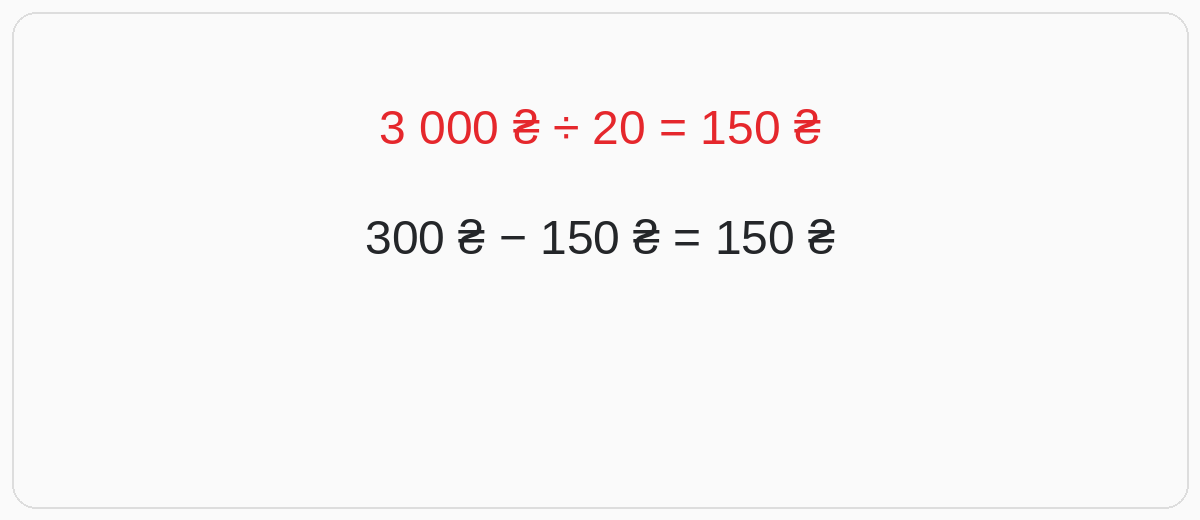
The store spent UAH 3,000 on advertising and received 20 completed, paid orders. Advertising cost per order: 3,000 ÷ 20 = UAH 150. If all 20 orders came from different new customers acquired through this advertising, and there were no other acquisition costs, CAC—the cost of acquiring a new customer—is also UAH 150. If the test required additional spending on filming or customer acquisition work, add it to the advertising cost before calculating CAC.
Total revenue is UAH 20,000. Contribution after advertising per order is 300 − 150 = UAH 150, or UAH 3,000 in total. To determine net profit, account for fixed costs and taxes. Separately add filming and additional labor costs if they arose from the test.
In this example, an advertising cost of UAH 300 per order would use up the entire contribution before advertising. Set a planned limit below that amount, leaving room for other costs and the desired profit. There is no universally acceptable CAC benchmark.
5. How customer surveys in Torgsoft help assess TikTok
In Torgsoft, you can collect customer responses during a sale and through follow-up calls, then analyze them by period and store location. The available features are described in the customer survey guide. For your test, prepare the question “How did you hear about this offer?” with the options “TikTok,” “Recommendation,” “Saw it in the store,” and “Other.”
A customer’s answer records the source they say introduced them to the offer. They may have seen several messages and name the one they remember. A survey is supporting evidence. Compare responses with paid sales, cancellations, and returns; a survey does not automatically identify the source of every order.
6. A seven-day testing plan
- Day 1. Choose a product, check stock, calculate the contribution, and set a spending limit and a stop condition.
- Day 2. Check the mobile product page, the order process, and whether the salesperson is ready to respond.
- Day 3. Publish a demonstration with a commercial content disclosure. Record questions and inquiries.
- Day 4. Publish an answer to a frequently asked question. If the location is available, launch a limited paid test.
- Days 5–6. Monitor spending, stock, inquiries, and order fulfillment. Stop advertising if the limit is reached or the store cannot fulfill the offer.
- Day 7. Reconcile spending and completed, paid orders, calculate the contribution, and decide whether to run another test.
If the contribution is below plan or there are no confirmed sales, pause spending and review the video, product page, and customer service. Keep orders awaiting payment or receipt by the customer under review. After sales are complete and returns have been accounted for, refine the calculation; if the result is acceptable, retest the offer with a controlled budget.
Official source
Ukraine’s Law “On Advertising” No. 270/96-VR, Article 9 — identification of advertising


 Go back to the previous step